

Table of Contents
Digital Marketing in 2026: An Easy Guide for Beginners
Digital marketing has become an important part of how businesses connect with customers. Whether a company is large or small, having a strong online presence can help it reach the right audience, build trust, and generate new opportunities. In 2026, digital marketing continues to evolve as customer expectations, search behavior, social media platforms, and technology change.
For beginners, digital marketing may seem complicated because it includes many different areas. However, understanding the basic concepts makes it much easier to create an effective online strategy. This guide from Learndg explains the major areas of digital marketing and how they work together.
What Is Digital Marketing?
Digital marketing is the process of promoting a business, product, service, or brand through digital channels. These channels can include search engines, websites, social media platforms, email, online advertising, and other internet-based platforms.
Traditional marketing often depends on channels such as newspapers, television, radio, and physical advertisements. Digital marketing, on the other hand, allows businesses to communicate with audiences online and measure many aspects of their campaigns.
A successful digital marketing strategy focuses on reaching the right people with useful information at the right stage of their customer journey.
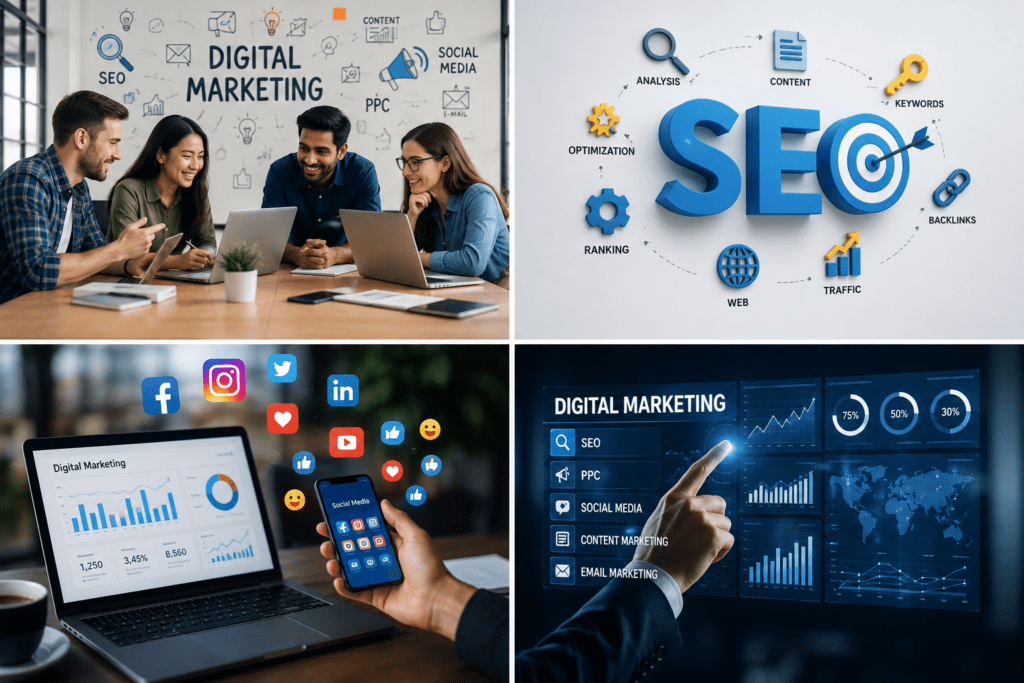
digital marketing in 2026 offers new opportunities for businesses to reach their target customers.
Why Is Digital Marketing Important in 2026?
People spend a significant amount of time online researching products, comparing services, reading reviews, watching videos, and communicating with brands. Because of this behavior, businesses need to understand how to reach potential customers digitally.
1. Helps Businesses Reach the Right Audience
Digital platforms allow businesses to target audiences based on factors such as interests, location, search behavior, and online activity. This can make marketing campaigns more relevant.
2. Builds Brand Awareness
Consistent online content can help people recognize and remember a brand. Websites, social media posts, videos, and helpful articles can all contribute to brand visibility.
3. Supports Customer Engagement
Digital marketing provides opportunities for businesses to communicate with customers through comments, messages, emails, social media, and other online channels.
4. Provides Measurable Results
Digital marketing platforms provide useful data about website visits, engagement, clicks, conversions, and campaign performance. Businesses can use this information to understand what works and improve their strategies.
Main Types of Digital Marketing
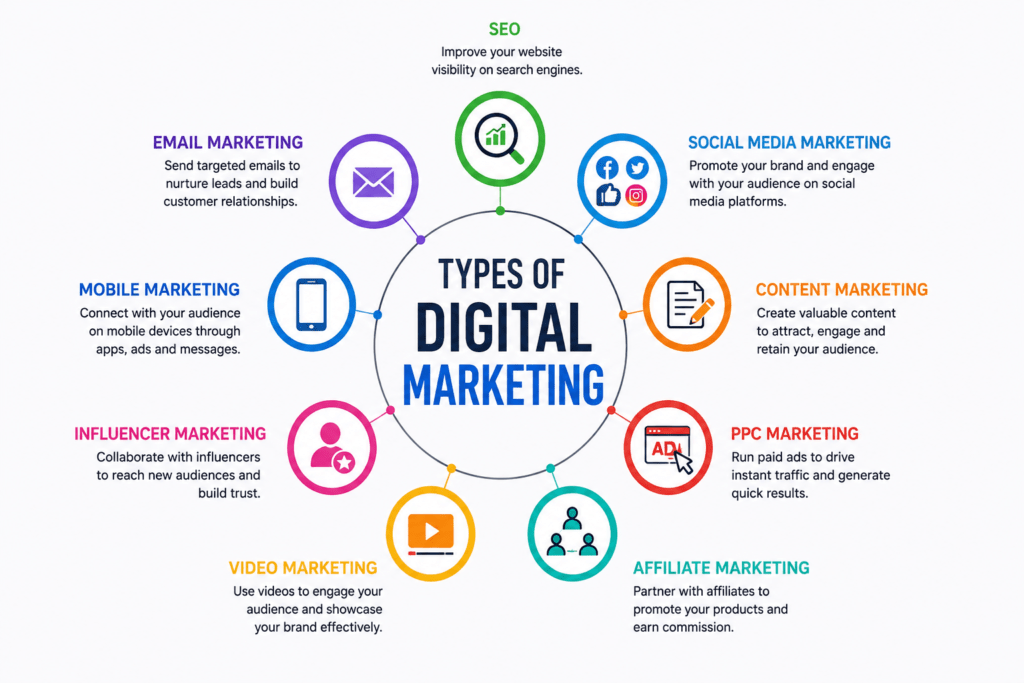
Digital marketing includes several important areas. Beginners should understand each one before creating a complete digital marketing strategy.
1. Search Engine Optimization (SEO)
SEO is the process of improving a website so that it can appear more prominently in relevant search engine results.
When people search for information, products, or services, they often use search engines. SEO helps businesses make their websites more useful and accessible to both users and search engines.
Important Areas of SEO
On-page SEO focuses on elements within a website, including headings, content, keywords, internal links, images, and page structure.
Technical SEO focuses on aspects such as website speed, mobile usability, crawling, indexing, and website architecture.
Off-page SEO involves activities outside the website that can contribute to its authority and visibility.
For beginners, the best approach is to create useful content for people first while following sound SEO practices.
2. Content Marketing
Content marketing involves creating and sharing valuable information to attract and engage a target audience.
Content can include:
- Blog articles
- Videos
- Infographics
- Guides
- Case studies
- Social media posts
- Educational resources
Good content answers questions, solves problems, and provides useful information. Instead of only promoting a product, businesses can use content to demonstrate their knowledge and build relationships with potential customers.
3. Social Media Marketing
Social media marketing uses platforms such as Instagram, Facebook, LinkedIn, YouTube, and other social networks to communicate with an audience.
A successful social media strategy should focus on useful and engaging content rather than simply posting promotional messages.
How Beginners Can Start
First, identify where the target audience spends time online. Then choose a small number of relevant platforms and create a consistent content schedule.
Businesses can share educational posts, short videos, customer stories, company updates, tips, and other content that matches their audience’s interests.
4. Pay-Per-Click Advertising
Pay-per-click, commonly called PPC, is an online advertising model where advertisers generally pay when someone clicks an advertisement.
Search advertising can help businesses appear when people are actively searching for relevant products or services. Social media advertising can also help businesses reach specific audience groups.
PPC can provide faster visibility than organic SEO, but campaigns need careful planning, relevant landing pages, appropriate targeting, and continuous performance monitoring.
5. Email Marketing
Email marketing allows businesses to communicate directly with people who have chosen to receive their messages.
Businesses can use email to share:
- News and updates
- Educational content
- Offers
- Product information
- New blog posts
- Helpful resources
The most effective email campaigns provide useful information and avoid overwhelming subscribers with unnecessary messages.
6. Website Marketing
A website is often the central part of a digital marketing strategy. SEO, social media, advertising, and content marketing can all bring visitors to a website.
However, attracting visitors is only one part of the process. The website should also be easy to navigate, mobile-friendly, informative, fast, and clear about what visitors should do next.
A strong website can help turn online traffic into enquiries, leads, subscribers, or customers.
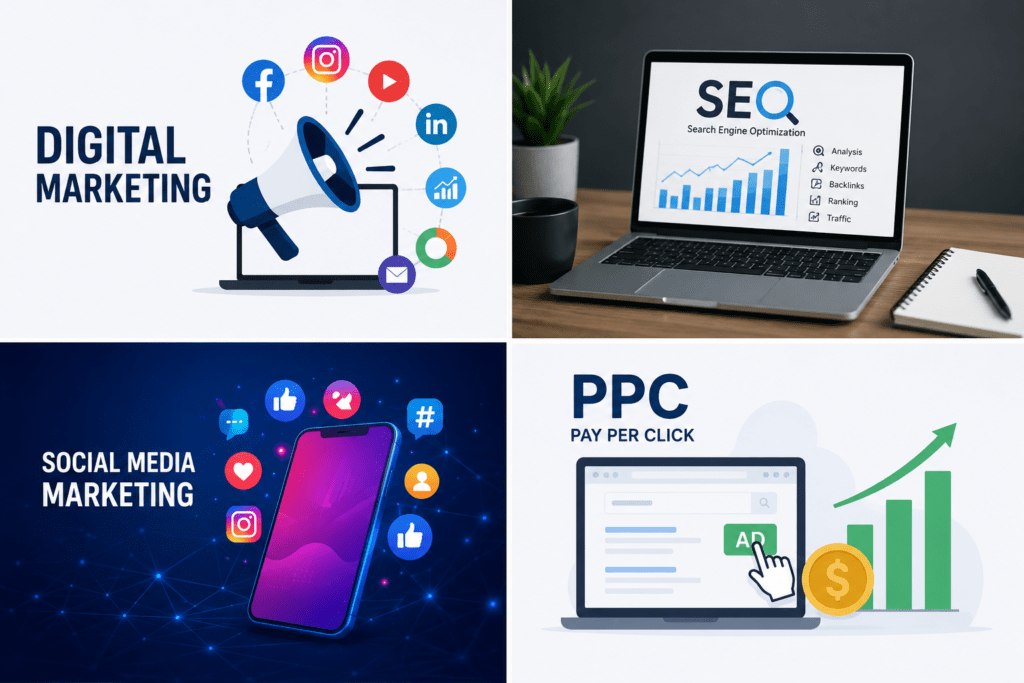
Beginners can use Digital Marketing in 2026 strategies to build a strong online presence.
The Role of AI in Digital Marketing
Artificial intelligence is becoming increasingly important in digital marketing. Marketers can use AI-powered tools to support tasks such as brainstorming, data analysis, content planning, customer research, and workflow automation.
However, AI should support human creativity and decision-making rather than replace them completely. Content still needs accuracy, originality, useful information, and a clear understanding of the audience.
In 2026, marketers who learn how to combine technology with creativity, strategy, and human judgment can create more effective campaigns.
How to Create a Digital Marketing Strategy
A digital marketing strategy gives a business a clear direction instead of relying on random online activities.
Step 1: Define Your Goal
Start with a specific objective. Your goal could be increasing website traffic, generating leads, improving brand awareness, or increasing online sales.
Step 2: Understand Your Audience
Learn about your target customers, including their needs, questions, interests, and online behavior.
Step 3: Choose the Right Channels
You do not need to use every digital marketing channel. Select platforms and methods that are relevant to your audience and business goals.
Step 4: Create Useful Content
Develop content that answers customer questions and provides genuine value. Use different formats such as blogs, videos, images, and social media posts.
Step 5: Measure Performance
Use analytics and platform data to monitor traffic, engagement, leads, conversions, and other important metrics.
Step 6: Improve Your Strategy
Digital marketing is not a one-time activity. Review your results regularly, identify what works, and make improvements based on data.
Digital Marketing Trends to Watch in 2026
Digital marketing continues to change quickly. Some important areas to watch include:
AI-Assisted Marketing
AI tools are increasingly being used for research, planning, automation, and analysis.
Short-Form Video
Short videos remain an important way for brands and creators to communicate quickly and attract attention.
Search Beyond Traditional Search Engines
People increasingly discover information through different platforms, including social networks, video platforms, maps, and other digital services.
Personalized Experiences
Customers expect online experiences to become more relevant to their interests and needs. Businesses can use customer insights responsibly to create more useful experiences.
Helpful and Original Content
As online content continues to grow, genuinely useful, clear, and original information can help brands stand out.
Common Digital Marketing Mistakes Beginners Should Avoid
Beginners often make a few common mistakes when starting digital marketing.
One mistake is trying to use every platform at once. It is usually better to focus on channels that match your audience and goals.
Another mistake is expecting immediate results from every activity. SEO and content marketing can take time, while paid advertising may provide faster visibility but requires a suitable budget and strategy.
Businesses should also avoid copying content from competitors. Original, useful content provides more value to both audiences and brands.
Finally, do not ignore measurement. Without tracking results, it becomes difficult to know whether your marketing efforts are producing the desired outcome.
Conclusion
Digital Marketing in 2026 offers businesses many ways to connect with customers, build visibility, and grow online. SEO, content marketing, social media marketing, PPC, email marketing, website optimization, and AI-assisted tools each have an important role.
For beginners, the key is not to learn everything at once. Start with the fundamentals, understand your audience, choose the right channels, create valuable content, and measure your progress.
At Learndg, our goal is to make digital marketing easier to understand by providing practical and beginner-friendly information. With consistent learning and the right strategy, you can develop the skills needed to build a stronger digital presence in 2026.